Torres del Paine is expensive in the way that all remote places are expensive: everything is flown or trucked a long way, and the national park knows it. In high season a night in a refugio with meals can run 150 USD or more. But the W Trek — the five-day, 70-kilometre classic along the southern shore of the massif — can be done for a fraction of that if you camp, cook and book early. Here is how the budget version works.
Why it feels expensive
The park has a small number of licensed campsites, and in December–February they sell out. Refugios add bed, dinner and breakfast at premium prices, and the park entry fee itself is around 35 USD. Add the transfer from Puerto Natales and the W suddenly costs more than a week in the Alps. The single biggest lever is sleeping: campsites run roughly 12–30 USD per night, and the refugios' meal-only service lets you buy dinner without the bed. The secret is that the park's pricing is tiered: the same mountain costs half as much from a campsite as from a refugio, and the views are identical.
Camping versus refugios
The key is that most refugios also run adjacent campsites with hot showers and a shop, so you camp but still get the infrastructure. In season, you must reserve campsites too — the popular ones fill days ahead, and some require prepayment. The campsite tier varies from grassy meadows to gravel terraces; check which services each site offers (cooking shelter, hot water, shop) before booking, because a shop-less site means carrying everything. The refugio sites also rent tents, sleeping bags and stoves, which saves you flying them halfway around the world — check what each site stocks before you pack.
The W in five days
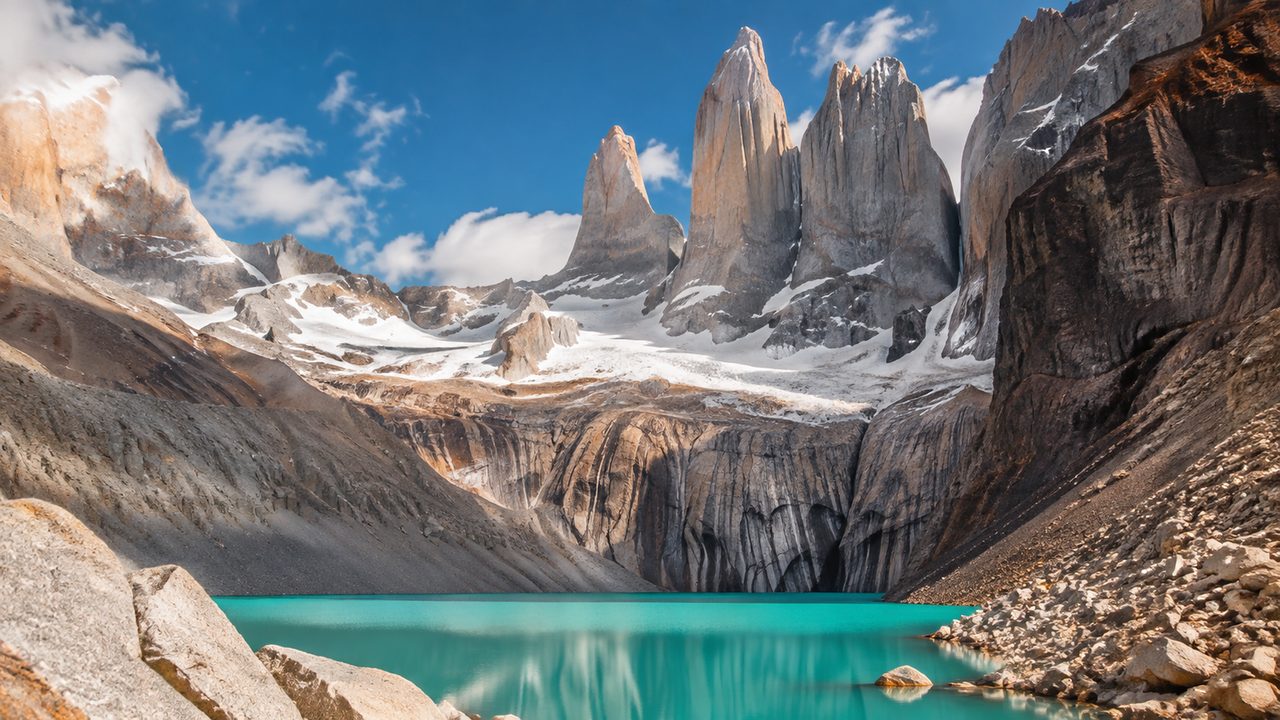
A standard budget-friendly loop: day one, take the catamaran across Lago Pehoé to Refugio Paine Grande and walk the Mirador Grey out-and-back (about 22 km); day two, back across to the French Valley, climbing to the Británico lookout (about 25 km); day three, over to Los Cuernos and up to the base of the towers via Chileno (about 22 km); day four, sunrise at the Mirador Las Torres before walking out to the welcome centre and the bus back to Puerto Natales. Total roughly 70 kilometres with one big climb per day. Flip the order if the weather forecast suggests it.
Food: cook it yourself
The campsites' shops sell basics at inflated prices, so buy in Puerto Natales before you enter the park: pasta, dried soup, oats, nuts, chocolate and a stove with enough fuel. The refugios sell meal-only dinner to campers at around 20–30 USD, which is a fair splurge on the coldest night. Budget around 5–8 USD per day for self-cooked food and a litre of gas or spirit for the stove. And carry lunch: there is nothing between the campsites.
Transport and entry
The bus from Puerto Natales to the park takes about two hours; from the park entrance the internal bus network and the catamaran connect the trailheads. Book the catamaran with the campsites — they sell as a package and sell out. Park entry is at the CONAF office, and the rangers now require you to check in with your itinerary. Exit by the buses that run from the welcome centre each afternoon; one daily bus connects to Puerto Natales, so time your last day accordingly.
Weather and season
The park is famous for wind and for weather that changes hourly. December to March is the season, with February the most settled; even then, plan for rain on half your days and wind that makes cooking a challenge. The upside of the budget plan is flexibility: a tent booked at each campsite can wait out a storm, whereas a refugio night is fixed. Carry a serious shell, a warm sleeping bag (nights are cold even in summer) and poles for the descents. The towers at dawn make all of it worth it.