Almost every pack we have seen cause pain was the wrong size or badly adjusted, not too heavy. The same 12 kilograms can feel like a burden or disappear entirely depending on where it sits. A proper fit takes about thirty minutes and changes every trip after it. Here is the sequence, in the order it matters.
Torso length, not height
Pack sizes follow torso length — the distance from the C7 vertebra, the bump at the base of your neck, to the top of your hip bones — not your height. Two people of the same height can need different frames by a full size. Measure it, then set the pack's torso length adjustment so the hip belt sits on top of your hip bones, not around your waist, and the shoulder straps meet your shoulders without a gap. Most shops will measure you for free; the measurement is the single most important number in your gear list.
The hip belt does the work
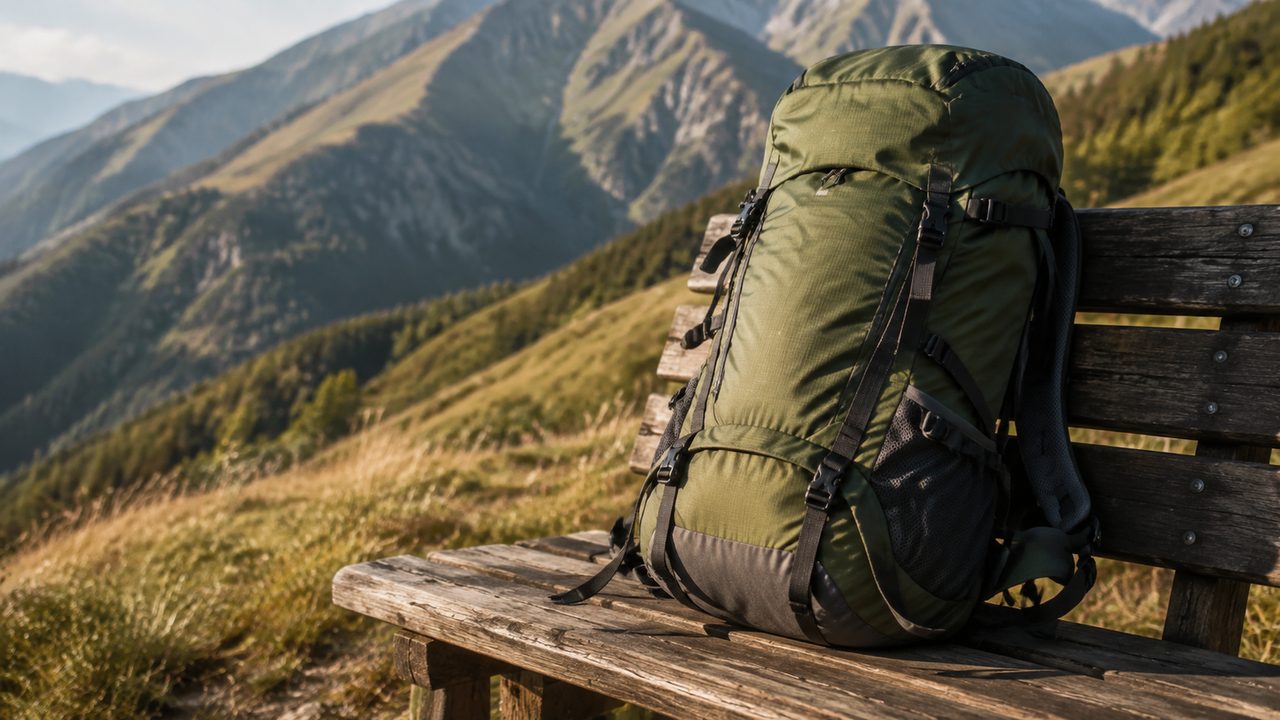
A correctly fitted pack carries roughly 80 percent of its weight on your hips. The hip belt should wrap over the top of the hip bones, with the padding hugging the iliac crest, and be snug enough that you cannot pull it down easily. Cinch it first, before the shoulder straps. If the belt rides up onto your waist, the frame is too long; if it slides down, too short. A good test: loosen the shoulder straps completely and the pack should stay in place.
Packing the load
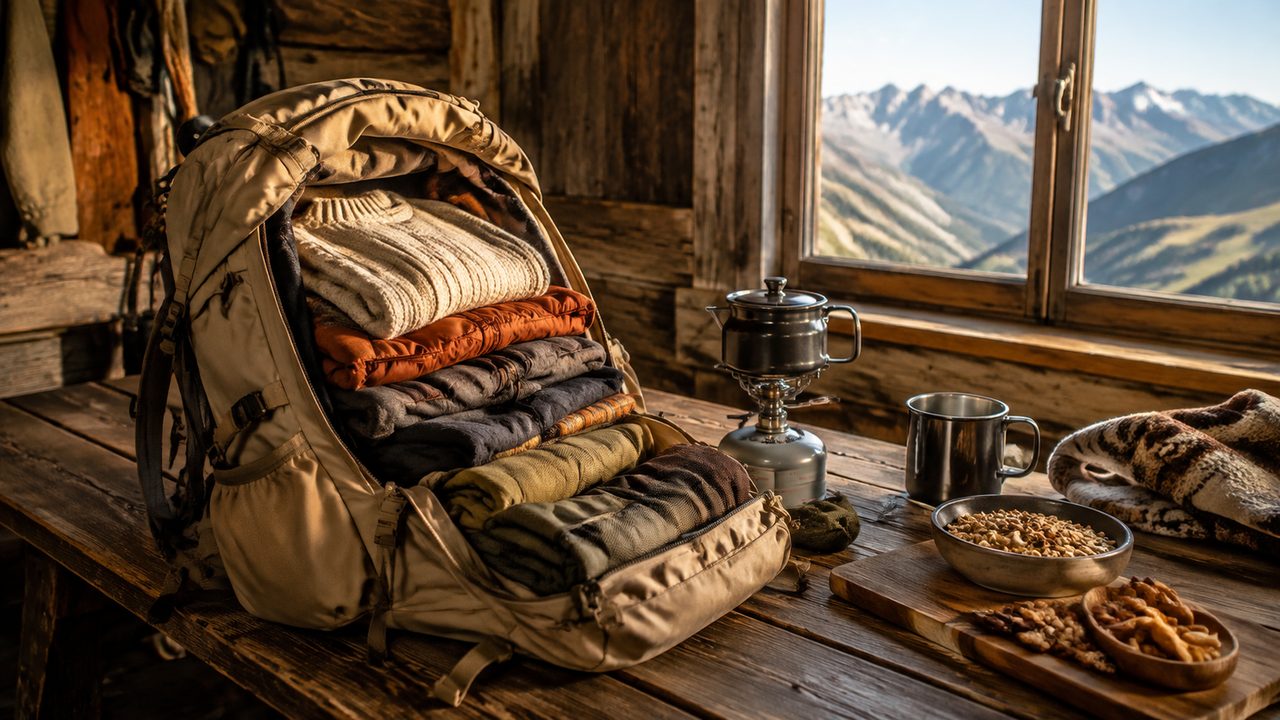
Heavy things go high and close to your back: the tent, the stove, the first day's food, in the main compartment against your spine at shoulder-blade height. Mid-weight gear — clothes, spare food — fills the middle, and light stuff such as the sleeping bag and jacket goes low or in the lid. A pack loaded this way handles better on rough ground than one with the weight low. Keep the side pockets for light items: a litre of water on each side is fine, but three litres low down will pull you backwards.
Shoulder straps and sternum
Shoulder straps should wrap over your shoulders and lie flat, with the load lifters, the small straps above them, pulling at a 45-degree angle to keep the pack's top against your back. The sternum strap sits at chest height and stops the shoulder straps sliding outward; it should not bear weight. Set the load lifters last, and readjust everything whenever the load changes — a pack fitted for 15 kilograms behaves differently with 8. The adjustments take seconds, and walkers who skip them carry the consequences all day.
Frames, gender and fit
Internal frames have replaced external ones almost entirely because they keep the load close and stable; a good internal frame also transfers weight to the hip belt cleanly. Many brands offer women's-specific frames with shorter torso lengths and curved shoulder straps; the point is fit, not marketing. The women's version of a pack often fits men under 175 cm better than the men's version does. Try the load on with 10 kilograms in it and walk up and down stairs — the test that reveals whether the frame and the belt agree with your body.
The 30-minute test
Finish with the walk test: load the pack with your real trip weight, adjust in the order above, and walk for twenty minutes on varied ground. You are aiming for no hotspots on the shoulders, no pressure on the collarbone, and the belt doing the carrying. When you get home, adjust for one more variable — the season. A pack fitted for a t-shirt carries differently over a thick jacket. Thirty minutes of attention here is cheaper than any cushioning gadget and more effective than any pack upgrade.