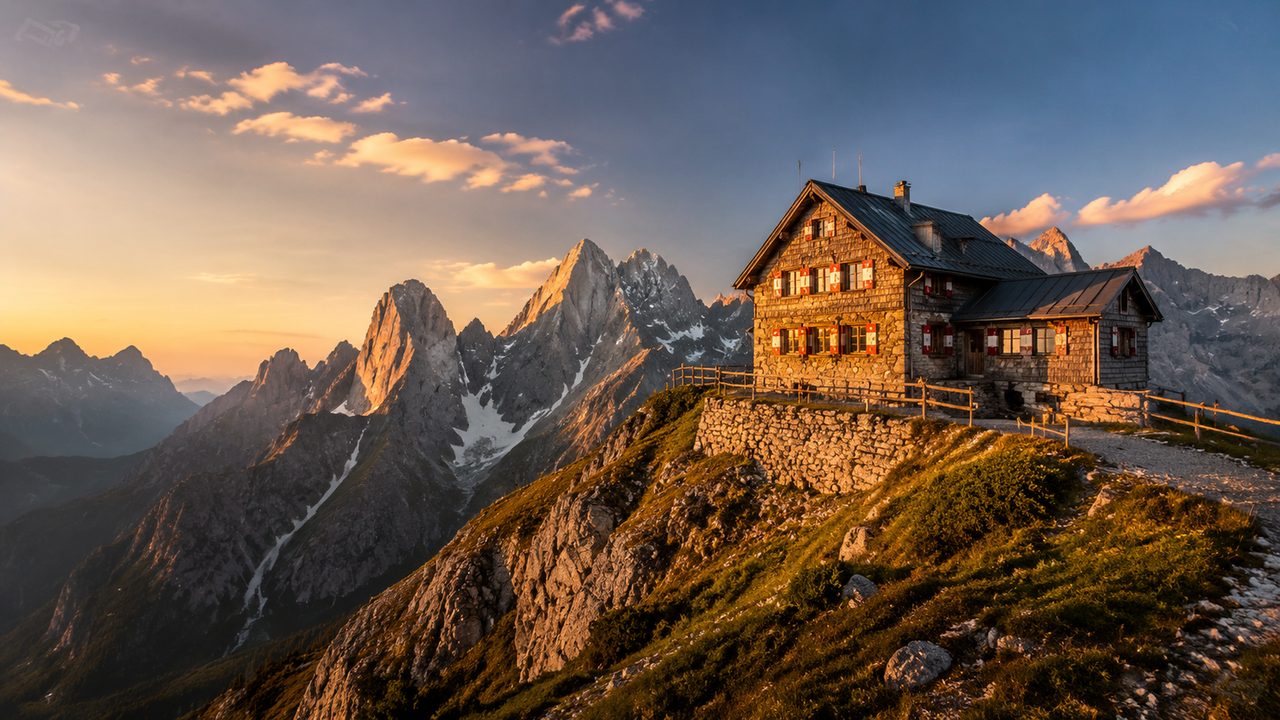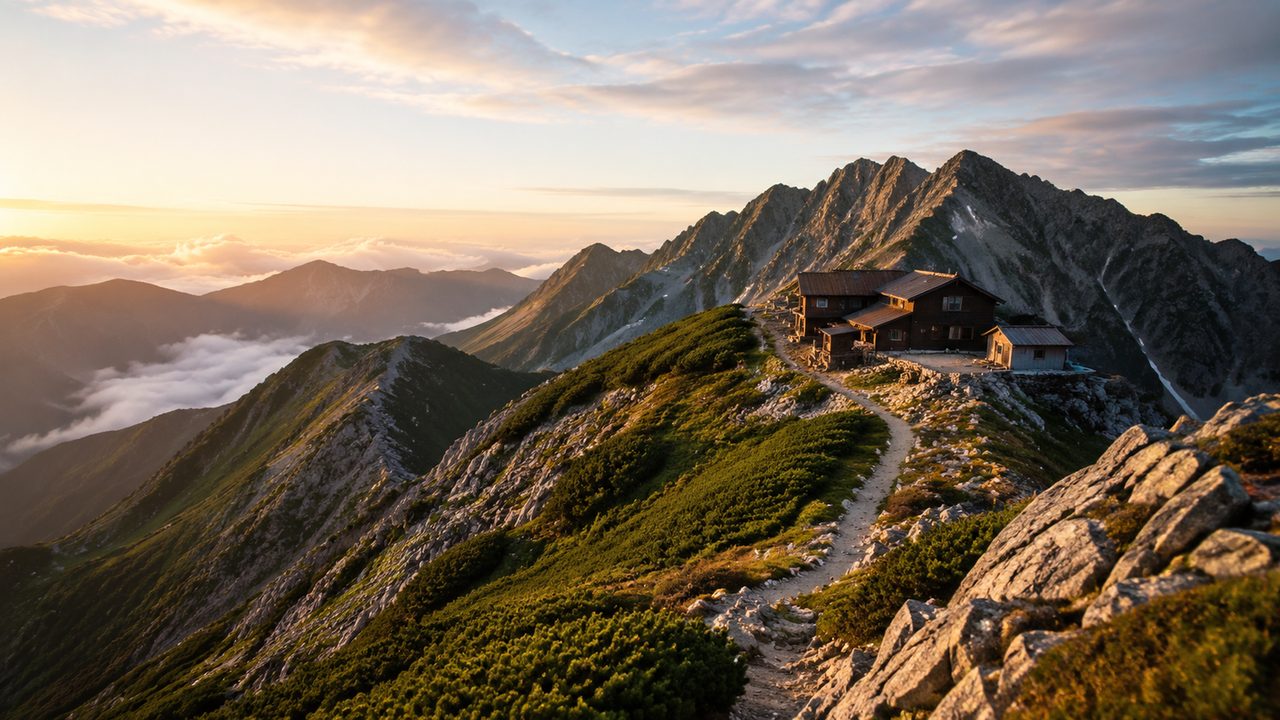
The Japanese Alps — three ranges on the main island of Honshu — offer some of the best hut-to-hut walking in the world, with a distinctly Japanese system: staffed huts on every major ridge, food and beer at altitude, and an onsen waiting in the valley. The classic introduction is the Northern Alps (Hida range) from Kamikochi, where the ridgeline walk to Mount Yarigatake, the so-called Matterhorn of Japan, delivers everything the Alps promise, with scenery that looks like a woodblock print.
Kamikochi: the starting gate
Kamikochi is a valley floor at 1,500 metres, car-free and bus-only, ringed by 3,000-metre peaks. The walking starts at the bus terminal: an easy hour to the Kappabashi Bridge, then the trail climbs through larch forest towards the ridgeline. Kamikochi itself is a complete day trip — the riverside walks are flat and spectacular — but the point is to go up. The standard route runs from Kamikochi via the Yarisawa valley or over the Kasa Ridge; most walkers take the Yarisawa river path on day one and the ridge on the way back.
The ridge to Yarigatake
The aim of the classic trip is Mount Yarigatake, 3,180 metres, whose spear-like summit pyramid is the symbol of the range. The last section involves chains and fixed ladders on exposed rock — exciting but safe when dry, and genuinely sketchy in rain. From the hut at its base, a pre-dawn start gets you to the summit for sunrise over the whole range. The ridge connecting Yari to the south, the Daikiretto notch, is a different league and not for beginners; the standard Kamikochi–Yari circuit stays on the marked, maintained route.
Huts: booking, bunks, meals
Mountain huts in the Japanese Alps are staffed and sell meals, and in July–August many fill days ahead — book online or by phone once you know your nights. Expect a night in a shared tatami or bunk room for 9,000–13,000 yen with dinner and breakfast, and a beer at the little bar. Rules are simple and strict: take your shoes off, keep the dormitory quiet after nine, and pay cash — most huts do not take cards. The huts also sell water and snacks, which lightens the carry, but the price is double the valley rate, so pack lunch for the long days.
Onsen: the reward
The Japanese Alps' finest invention is the after-trip onsen. Kamikochi's village has several, including one on the riverbank where you can soak with the peaks overhead; higher up, some huts have a small bath or hot spring nearby. The ritual matters: wash before entering, keep the towel out of the water, and expect to share the pool with everyone from your hut. Soaking after two days of ridge walking is the most civilised way to finish a trek anywhere. It also resets the legs for the bus journey home.
Ridge etiquette
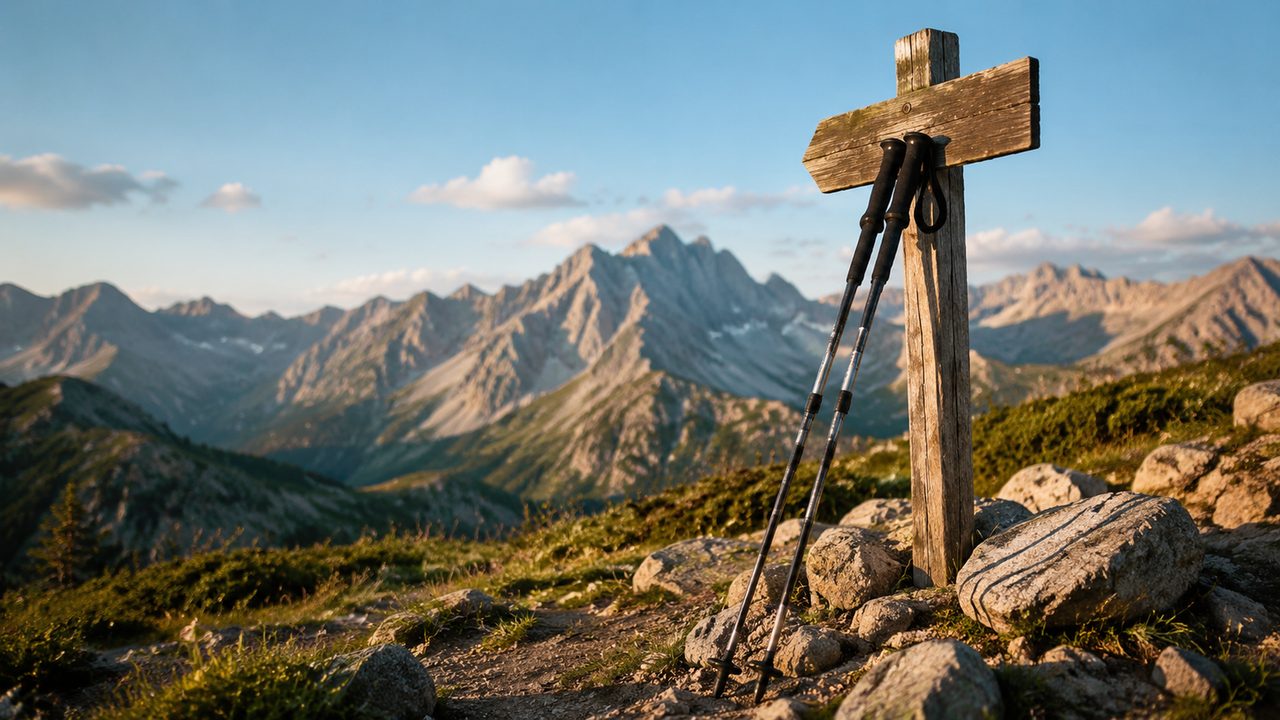
The trails are busy by Japanese standards — weekends in August are a queue in places — and the etiquette is precise: uphill traffic has priority, pass on the inside, and never stop on a chain section. The Japanese Alps are also a place of small rituals: bells or a call when approaching blind corners, a nod to the hut warden, and rubbish carried home, since there are no bins on the ridge. Learn the two words for coming through and the trail treats you well.
Season and snow
The hut season runs early July to early October, with the trail network fully open from mid-July. Snow lingers on the north faces into July, and the chains are icy after early October; late September is the sweet spot — dry, cool, and the autumn colours starting. Rain is the big variable: the Japanese Alps are wet, and the hut wardens post daily forecasts that everyone reads. A storm day on the ridge is a hut day — play cards, eat, and let the onsen wait.