Hut-to-hut is the lightest way to walk a mountain range. The hut carries the tent, the kitchen and the heavy pans; your job is a day pack with a change of clothes and a sleeping bag liner. This is the list that has taken me through the Dolomites, the Bernese Oberland and the Pyrenees, and it comes in at around nine kilograms with three days of lunches.
The pack
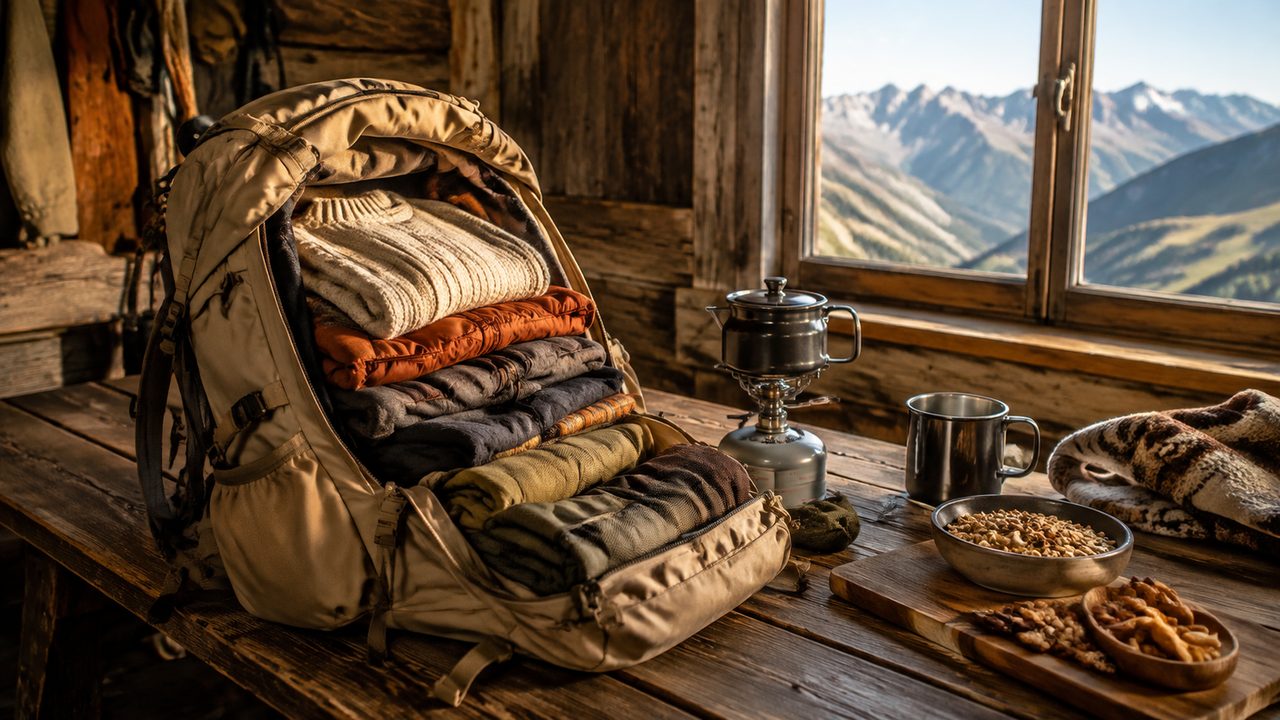
A 40–45 litre pack, around 1.4 kg, with a proper hip belt, a rain cover and side pockets you can reach while walking. Anything bigger tempts you to fill it; anything smaller cannot hold three days of lunches. Inside, two packing cubes keep order — one for clothes, one for the small stuff.
| Item | Weight |
|---|---|
| 40–45 L pack | 1.4 kg |
| Sleep sack liner, earplugs, eye mask | 0.2 kg |
| Hut sandals | 0.3 kg |
| Down jacket and rain shell | 0.65 kg |
| Clothes for three days | 1.2 kg |
| First aid and toiletries | 0.4 kg |
| Lunches, snacks and treats | 2.4 kg |
| Water and bottle | 1.5 kg |
| Total | ~9 kg |
Sleeping, though the hut has beds
Huts provide blankets and pillows, so you do not need a sleeping bag — but you do need a liner or sleep sack of about 180 g, because huts expect one. A pair of earplugs and a small eye mask turn a 30-bed dormitory into something approaching rest.
Pack light hut sandals or flip-flops, about 300 g. After nine hours in boots your feet will want them, and the shower floor demands them.
Clothes for three days
Two merino or synthetic shirts, two pairs of socks, one pair of underwear, a mid-layer and a warm down jacket of about 350 g for the evenings and the high passes. One pair of softshell trousers, a rain shell with taped seams, plus a buff, a sun hat and light gloves.
The system is wash-one-wear-one. Every hut has a washbasin and a drying room, so in three days you never carry more than a small ball of dirty laundry.
Food and water
Huts serve breakfast and dinner, so you only carry lunch. For three days: a loaf of bread or flatbread, cheese, cured sausage, an apple, a tomato, and a daily ration of chocolate and nuts. That is about 700–900 g of food per day, bought at the last valley supermarket.
Water is the heavy item, and the good news is that huts usually sell or provide it. Carry a 1.5-litre bottle and a way to refill; a small filter or purification tablets give you the option of stream water between huts.
The small stuff that saves the trip
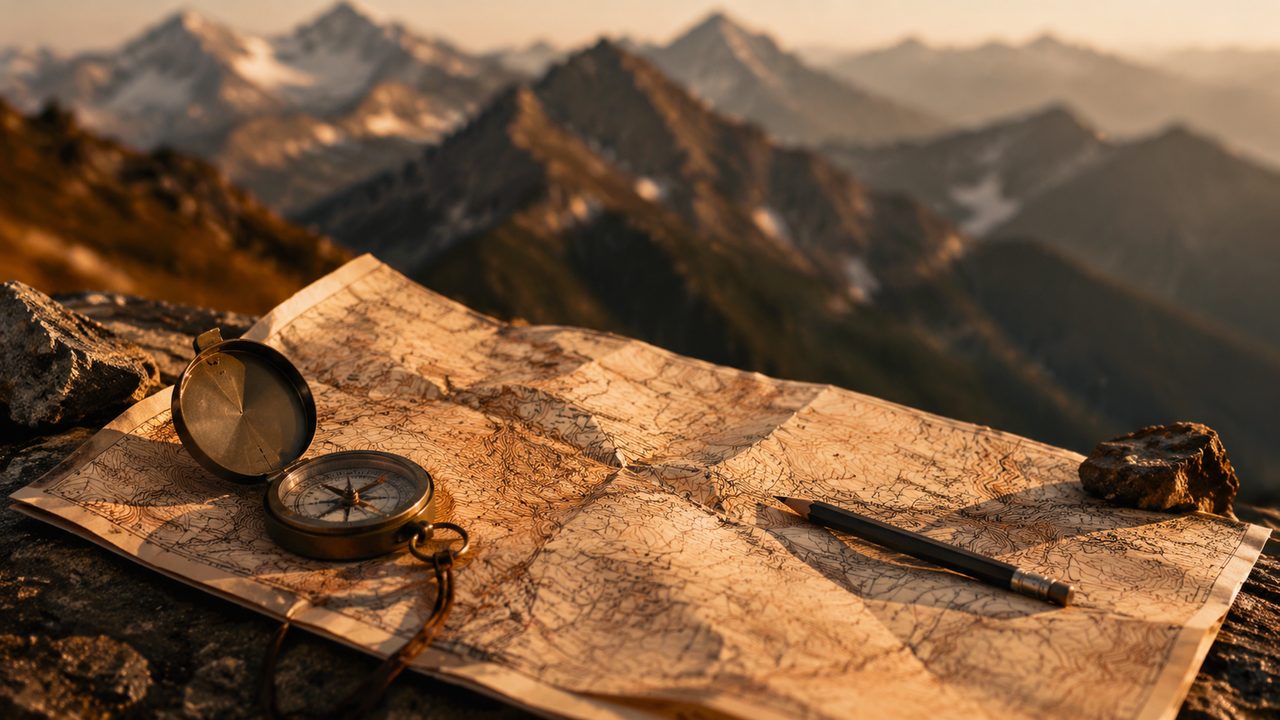
A headlamp with fresh batteries, because hut dinners end in the dark; a 150 g first-aid kit with blister plasters and leukotape; sunscreen and lip balm; a tiny towel; toiletries in a dry bag; and a phone with offline maps plus a paper map of the stage. A pocket knife and a spoon earn their grams, since some huts expect you to wash your own bowl.
Nothing in this list is exciting, and that is the point. On a hut walk every item earns its place by being used at least twice.
What stays at home
No tent, no stove, no pot, no fuel. No full-size towel, no jeans, no cotton anything. No extra shoes beyond the sandals. The heaviest item you carry should be the least-used one, and the least-used one should be the first thing you cut.
Weigh the pack on a kitchen scale before you leave. If it reads more than 10 kg with food, put something back and take the lighter thing. Your knees will thank you on the descent.