The Alta Via 1 strings the Dolomites together from north to south: 150 kilometres from Lago di Braies to Belluno, with roughly 7,000 metres of climbing and a different limestone wonder every day. It is a hut-to-hut walk, which means no tent and no cooking stove — and that is where the budget either works or falls apart.
What the Alta Via 1 is
The route crosses the southern limestone ranges in about eleven walking days, from the pale waters of Braies down toward the olive groves above Belluno. Unlike the more technical Alta Via 2, the AV1 stays on marked paths and old mule tracks, with a few short cable-protected sections thrown in to keep you honest. A reasonable level of fitness and a head for exposed steps are enough.
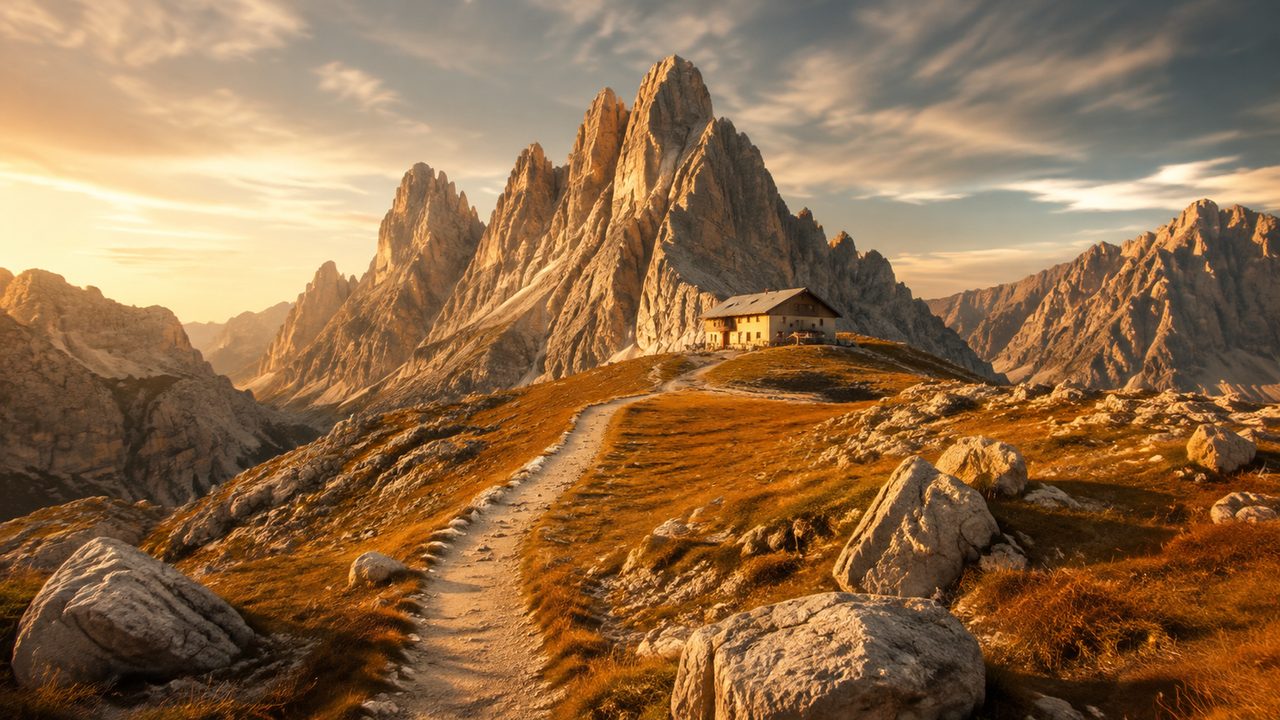
Every night ends at a rifugio — a mountain hut run by the CAI club or a private family, with dormitories, a dining room and hot showers for a small fee. That simplicity is the route's real luxury.
The classic first stages
The first day climbs from Lago di Braies over the Fanes plateau, a high karst grassland scattered with lakes and dwarf pines, to the Rifugio Fanes or Lavarella. It sets the pattern: long morning climbs, high pastures, and afternoon thunderstorms that arrive like clockwork.
From there the route swings through the Cinque Torri and under the great walls of Averau and Nuvolau, crosses Passo Giau at 2,236 metres, and passes the First World War trenches around Monte Lagazuoi. The Lagazuoi summit, reached by lift or a short scramble, is the highest point of the walk at 2,752 metres.
Where the money goes
Huts are the big item. A dormitory bed runs roughly 25–35 EUR, and half-board — bed, dinner and breakfast — about 60–75 EUR. To trim the bill, book bed-and-breakfast and order dinner by the menu, or carry the hut's packed lunch instead of buying one.
The fabled 8 EUR coffee at 2,700 metres is real and delicious, but three of those a day undo a week of saving. I drank the hut's tap water, bought the packed lunch only on days with no valley crossing, and spent the treat budget on one evening at the Rifugio Averau.
Eating well on a budget
The supermarkets of Cortina d'Ampezzo and the small shops in San Vito di Cadore are your resupply points. Buy bread, cheese, salami, fruit and a block of chocolate for two days at a time. Lunches on the AV1 are some of the best picnic food in Europe, eaten on a bench of dolomite with marmots for company.
Dinner in the huts is hearty and enormous: barley soup, speck, polenta and strudel. Do not skip it to save a few euros; the next day's climb is long and the soup is the fuel.
Getting there and back
Lago di Braies is reachable by bus from Dobbiaco, which has trains from Fortezza on the Brenner line. At the far end, Belluno's station connects by rail to Venezia Mestre, so you can fly into Venice, spend one night, and start walking within 48 hours of landing.
The mountain buses that link the valleys are punctual and cheap, and they are also the classic way to shorten a day or escape a storm, so keep cash for tickets.
Season and the fine print
The huts open from mid-June to late September, with August the busiest and most expensive window. I prefer the last week of June or the first half of September, when the snow has gone from the high passes but the crowds have not arrived.
Book beds at least a few days ahead in summer; warden email addresses are on the rifugio websites. Wild camping is not permitted in the park, so the huts are not optional — they are the system that makes the budget work. Carry earplugs, a liner, sandals and 20–30 EUR in cash per day, and the Dolomites will hand you one of the great walks in Europe for less than a week at the beach.