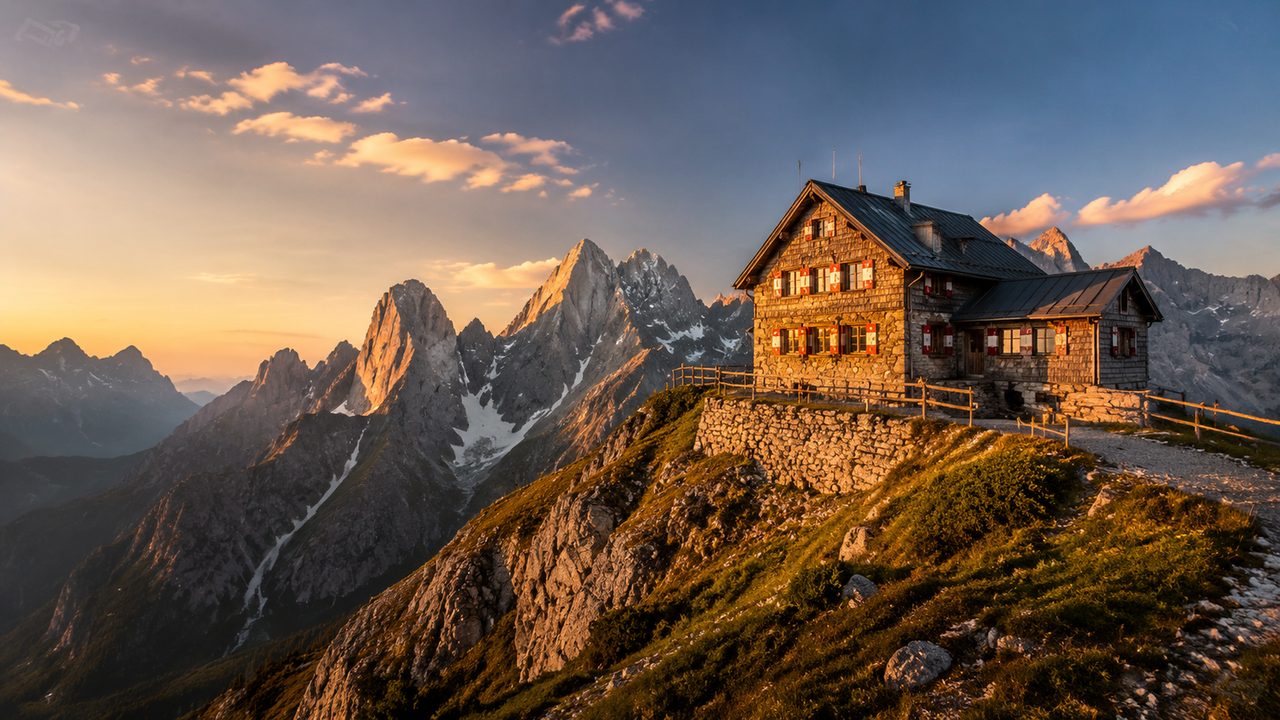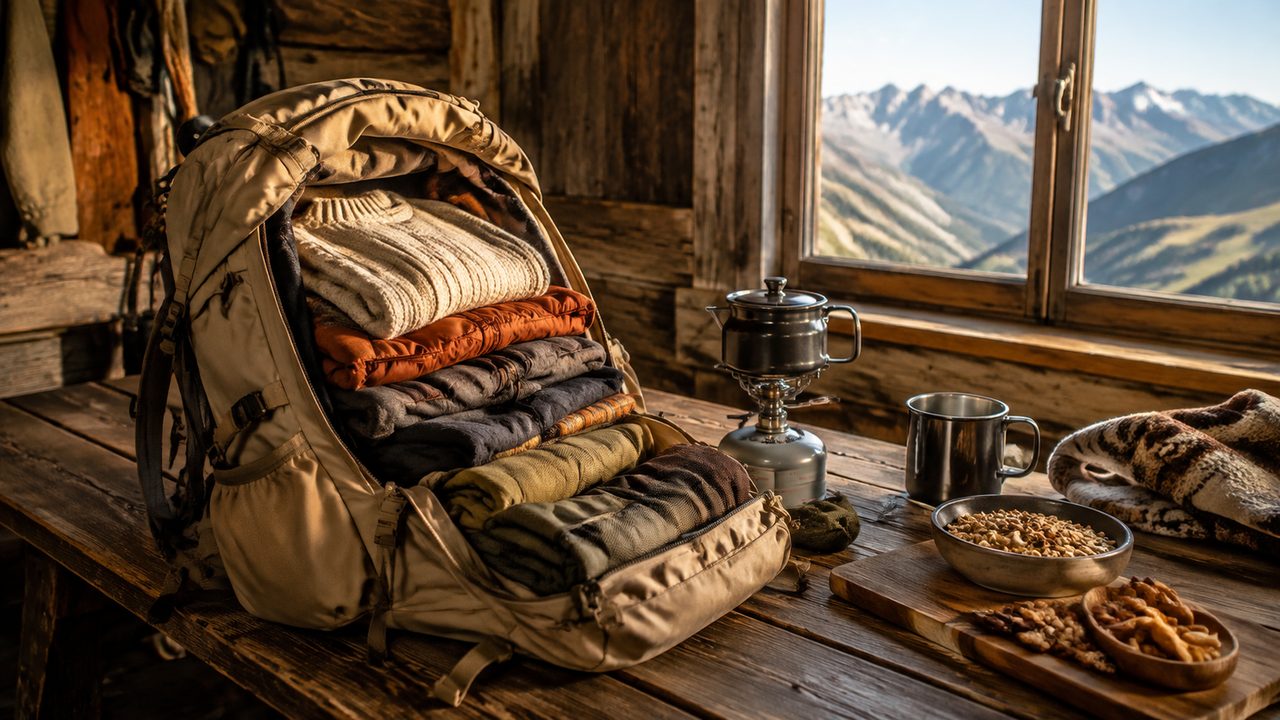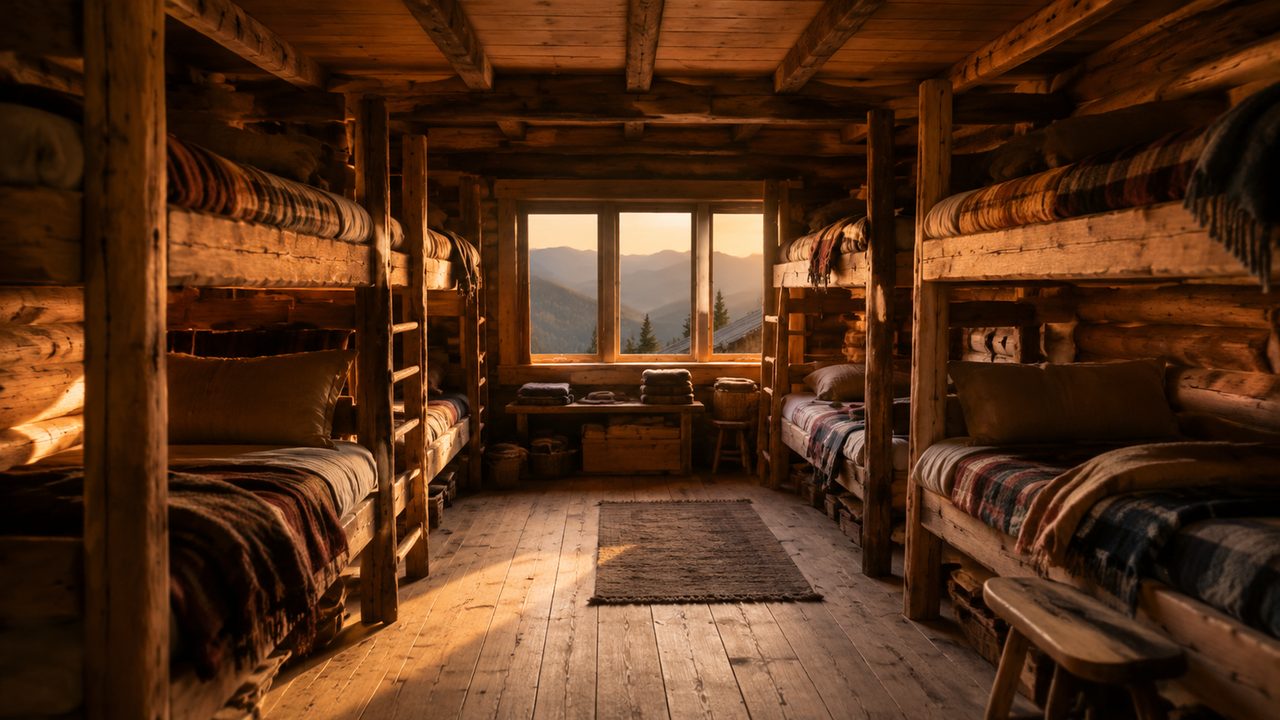
A mountain hut is the closest thing walking has to a shared house: strangers arrive wet, hungry and tired, and by breakfast they are borrowing each other's chargers and comparing forecasts. The system works because of a few unwritten rules, and knowing them is the difference between being the guest everyone likes and the one everyone groans about. None of them are complicated.
Claiming a bunk
In staffed huts, the warden assigns beds and the rule is simple: the bunk you sleep in is the bunk you take, and the lower bunks go to the oldest or the most tired, not the first through the door. A sleeping bag or liner on the mattress is the claim; leave your pack on the floor, not on the bed. In unstaffed or alpine club huts, first come is first served, and the etiquette is to take the highest or least comfortable bunk if you are last in. Never move someone's things to upgrade your own spot.
Wet gear and the drying room
The drying room is the hut's beating heart, and it has one rule: hang your wet things neatly, do not monopolise the radiator, and label anything expensive. Boots go on the shelf, not under the bunk. Take your wet shell off at the door before you drip through the common room, and never dry clothes directly on the stove or heater — the smell, and the fire risk, are everyone's problem. In the morning, the chaos is the point: grab your own socks and leave the room tidier than you found it.
The kitchen rota
In self-catering huts, the kitchen runs on a rota and on patience: the people cooking pasta at seven get the stove until they finish, and the people after them get it next. Wash up as you go, wipe the bench, and leave the communal pots better than you found them. The fridge is shared space with clear zones — label your food and take it when you leave. The golden rule of hut kitchens: nobody minds the smell of your dinner; everybody minds your mess at breakfast.
Quiet hours
The dormitory has a clock that everyone knows: after about ten at night, the hut is quiet. The warden or the last sleeper says the word, lights go off, and the conversation moves outside or ends. Headlamps are for finding your bunk, not for reading or packing — do the packing before lights out. Snoring is tolerated; rustling, phone screens and alarms at five in the morning are not. If you must leave early, prepare everything the night before and dress in the corridor.
Food, drink and the bar
Most staffed huts sell beer, wine and soft drinks, and the bar is the social engine: the place where the day's route stories are told and tomorrow's plan is made. The etiquette is to buy your round, keep the noise down when others are sleeping, and never treat the hut's limited supplies as negotiable — the beer that ran out at nine was someone else's plan too. If the hut is self-catering and you have extra food, leaving it on the communal shelf is a small gift the next walker will remember.
When it goes wrong
Hut life occasionally goes wrong: the snorer of the century, the group that treats the dorm as a party, the storm that keeps everyone inside for two days. The response is always the same — kindness and flexibility, then a word with the warden if it crosses a line. The warden's authority is absolute in a hut, and the hut's social contract is that you accept it. The walkers who arrive with earplugs, a sense of humour and their own tea bags are the ones who love hut life; the ones who arrive expecting a hotel are the ones who do not come back.