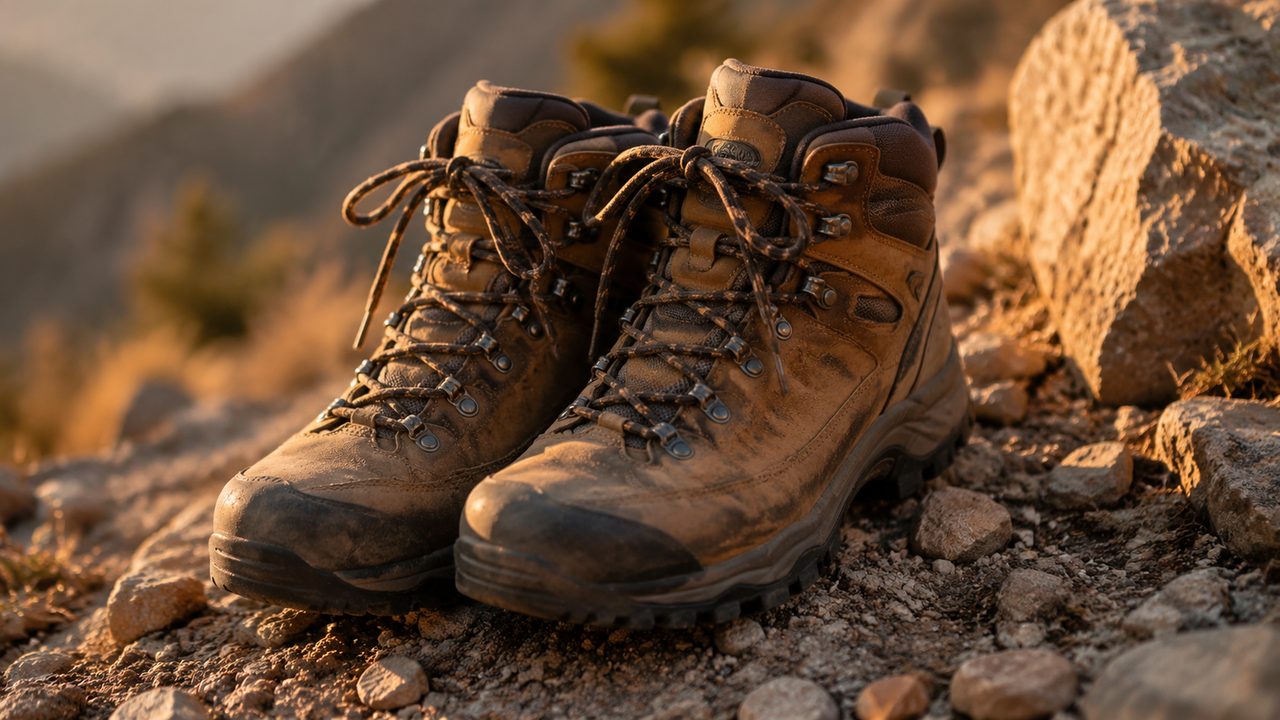
Boots are the piece of gear hikers argue about most, and the arguments mostly miss the point: there is no objectively best boot, only the right fit for your foot, your trail and your load. The blisters, black nails and aching arches that end trips are almost always fit problems wearing a brand-name disguise. These are the rules that have saved more of our trips than any specific model.
Fit before brand
A boot that fits is one where your heel stays planted when you walk uphill, your toes have room to splay and your foot does not slide forward on descents. Try boots on at the end of the day when feet are swollen, with the socks you will actually wear. Walk in them in the shop, uphill and down. If a boot hurts in the store, it will hurt in the mountains. And fit each foot separately — most people have one bigger than the other, and you buy for the bigger one.
Boot, shoe or approach shoe?
The old rule that serious walking requires ankle boots is gone. Modern trail shoes are lighter, dry faster and are perfectly adequate for day walks and well-graded trails with a light pack. Boots earn their height when you carry real weight, cross boulder fields or scramble: the ankle support and stiffer sole protect on unstable ground. Approach shoes — sticky rubber, flexible, low — fit the middle ground of technical day walks. Match the shoe to the ground and the pack, not to the trip's prestige.
Leather versus synthetic
Full-grain leather boots are heavy, slow to dry and near-indestructible; they mould to your foot over weeks and shrug off years of abuse. Synthetics are lighter, dry overnight and cost less, but they wear out faster and offer less support when the terrain gets rough. The middle option — a leather upper with a fabric collar — is where most walkers should look. Waterproof membranes help in wet grass and light rain but fail eventually; treat a boot's waterproofing as a feature with an expiry date.
The half-size rule
Feet swell on a long day, and they slide forward on descents, so a boot that fits in the shop can still be too small on the hill. Buy at least a half size larger than your street shoe, and make sure there is a thumb's width — about a centimetre — between your longest toe and the end when standing. Black toenails are the classic symptom of the too-small boot, and they cost you the trip. In winter or with thick socks, allow even more room; a laced boot can take up slack, but it cannot create length.
Breaking in, properly
A leather boot needs a break-in measured in hours, not minutes: two or three day walks of increasing length, with the boots laced firmly and the heels allowed to settle. Synthetics need almost none. The rules that actually prevent blisters are the same for both: keep your feet dry, change socks at lunch, and stop at the first hot spot — a blister is a friction event you can interrupt. Taping and a blister balm live in every pack we carry, even on short trips.
When to replace
Boots die from the bottom: when the sole has worn past the lugs' tread on the heel or the midsole has gone soft, the cushioning and grip are gone even if the upper looks fine. A good leather boot can be resoled; most synthetic shoes are not worth it. Count roughly 500–1,000 kilometres of useful life, depending on how you walk and how much you weigh. The cheapest boots you can find will cost you more in blisters and replacement; the most expensive ones will not fit you any better than the right pair at half the price.