The standard advice — waterproof jacket, waterproof trousers, done — fails because it treats rain as an attack to be repelled at all costs. The better system is layers with specific jobs: keep your skin warm and dry, let the insulation keep you warm, and let the shell shed water and wind while you manage the sweat you generate. Walking generates a lot of heat, and the failure of most rain systems is not leakage; it is condensation.
What rain actually asks
In steady walking rain, you generate far more moisture as sweat than falls from the sky, and a jacket that cannot breathe turns into a personal sauna. The enemy is not being wet — everyone gets wet eventually — it is being wet and cold at the same time, then stopping for lunch and chilling fast. The system's goal is to control the sweat and stay warm when you stop. That changes what each layer needs to do.
The base layer
Start with a base layer that wicks: merino wool or a good synthetic, not cotton. Merino's advantage is that it keeps insulating when damp, which is the exact situation you will be in. Fit matters — it should touch the skin and move moisture outward, not hang loose. In the coldest rain, a thin merino base plus one warm layer underneath the shell is warmer than a thick base alone, because the air between layers is the insulation. Cotton's one talent is staying wet; leave it at home.
The mid layer
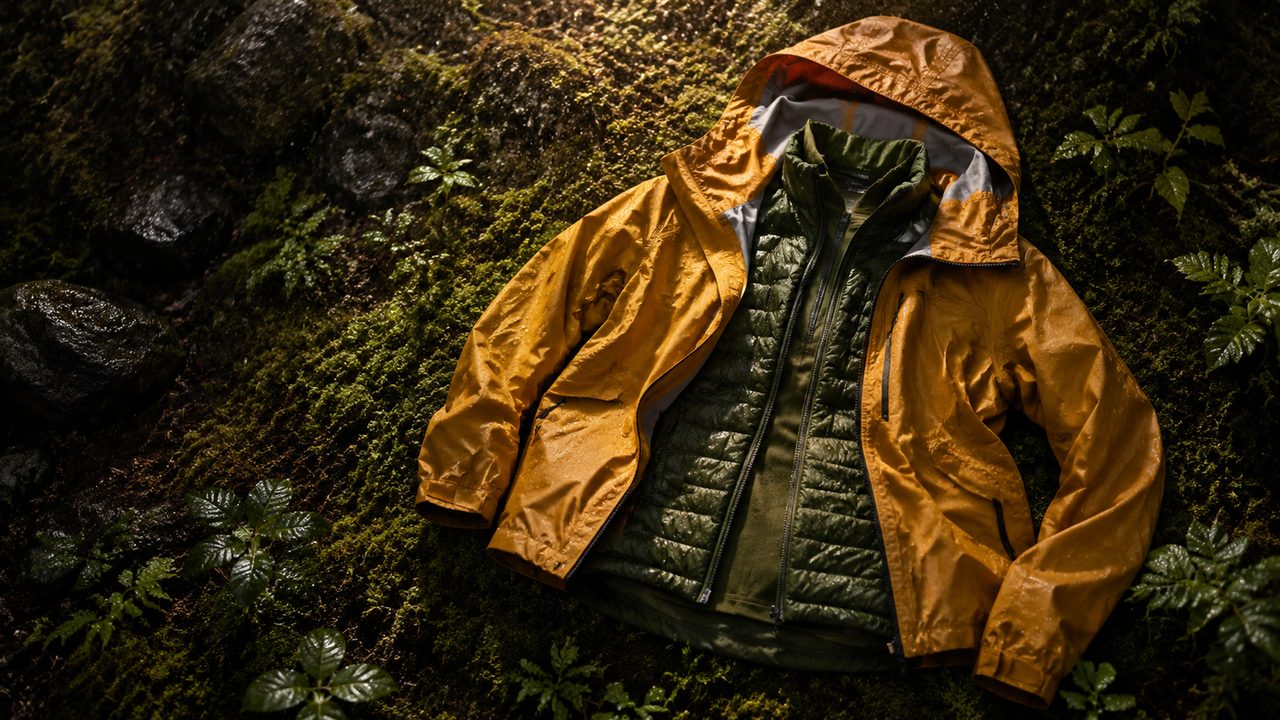
The mid layer's job is warmth with breathability: a fleece or a light down or synthetic jacket. Fleece keeps working when wet and is cheap; down is lighter and warmer but useless once soaked, so save it for the dry days unless it is sealed inside a waterproof shell of its own. The key number is how much you can vent: a full-zip fleece is better than a pullover because you can open it on the climbs. If you are sweating with the shell on, open the zip and the pit zips before you start taking layers off.
The shell
A good shell is waterproof, windproof and breathable — in that order — and most walkers overestimate how much breathability exists. Membrane jackets work well when new; the coating wears off and needs reproofing. Pit zips are the single best feature a rain jacket can have, because they vent heat without opening the whole front to the weather. A hood that moves with your head and a hem you can cinch matter more than the logo. If you run hot, accept a little dampness inside in exchange for not soaking the insulation.
Rain trousers and the pack
Rain trousers earn their place when it is cold and windy — wet thighs cool you fast — and they are simple: packable, side-zip, with a bit of room to walk. The pack cover protects the gear but makes the pack sweaty on your back; a compromise is a pack liner, a dry bag or a rubbish bag inside, plus a cover in sustained rain. Feet deserve the last word: waterproof boots with a gusseted tongue beat any sock when the path is a river, and a pair of dry socks in a bag in the pack is the highest-value luxury in the system.
Drying on the move
A rain system only works if it can recover overnight: wring the socks, hang the mid layer, and dry the shell's inside with a towel. In a hut or hostel, a drying room does the work; in a tent, you sleep with tomorrow's clothes in the bag. The habits matter as much as the gear: stop under shelter for lunch, change socks at the wet crossing, and accept that the last hour before the hut is always the wettest. Get the system right and a rain day is just a day — the valley ferns and the drumming on the hood are part of the walk.