Solo hiking gets a lot of fear and a lot of myth, and both miss the point. The mountains do not care whether you are alone, and most of the risk in a solo trip is ordinary risk — weather, navigation, a twisted ankle — happening without the cushion of a companion to share decisions. The answer is not to avoid solo walking; it is to build a trip where the decisions are made in advance and the margin is built in.
The plan you leave behind
The most important piece of solo gear is the plan someone else can use. Leave a written itinerary with a friend or family member: the route, the overnight stops, the expected daily finish times, and the absolute date by which you will check in. Then actually check in — a message at the arranged hour, every day. The plan has two jobs: it tells searchers where to look, and it gives you a commitment to the route that keeps decisions honest. A solo trip without this is not more adventurous; it is just less considered.
Honesty about your own limits
Solo, there is no one to talk you out of the bad decision or to carry the pack on the hard day, so the assessment has to happen before you start. Ask the unflattering questions: have you walked this grade of terrain before? How do you actually behave when tired, cold or lost? Can you navigate with the map when the phone is dead? The honest answer, written down, is your trip's rulebook. If a route needs skills you are still learning, do it with a partner first — the skills will still be there next season.
The margin in the pack
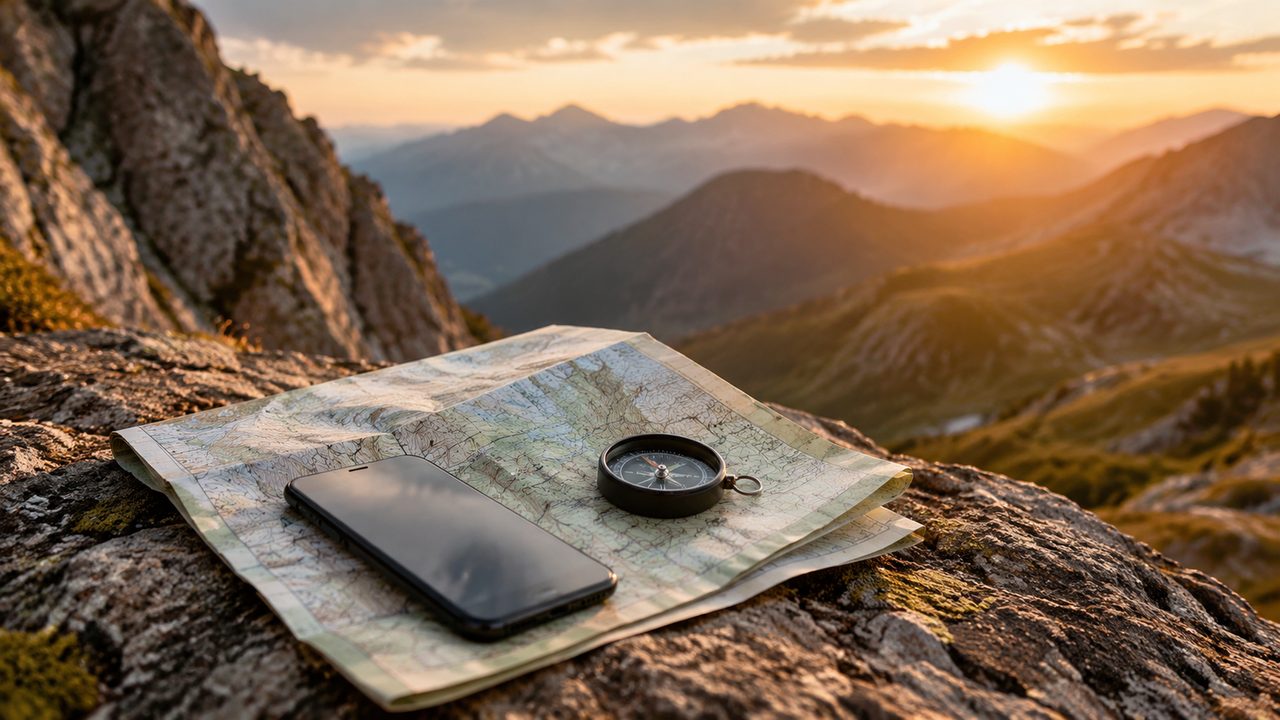
Solo walking needs margin, and margin weighs grams: an extra warm layer, one more day of food than the plan says, a few more hours of daylight than the schedule assumes, and water for one more stretch than the map suggests. The classic solo failure is the itinerary with no slack — every stage exactly full, every crossing on schedule — which turns any delay into a cascade of bad choices. Build in the slack at home: a plan that cannot absorb a slow morning is a plan that will eventually produce a risk.
Communication and beacons
A phone is a start, but solo walkers in remote country should consider a satellite messenger or personal locator beacon: one button sends your position, and most have a two-way message function that turns I am fine, one day late into a single press instead of a rescue. The devices cost little compared to the trips they protect, and the battery lasts weeks. Keep the phone charged and the beacon reachable, and remember that the devices only work if you keep the check-in habit that goes with them.
Route decisions solo
The solo walker's real skill is turning around. The decision criteria should be written before the trip: the weather threshold, the river level, the time of day that means the summit is off. Pre-decided rules are the defence against the solo walker's classic error — continuing because nobody is watching. On the hill, if the conditions break the rules you set at home, you turn around and call it a good day. The mountain will still be there, and so will you.
Why it is still worth it
None of this is an argument against solo walking; it is the argument for doing it properly. The solo days are the ones that teach you to be your own company, to trust your own decisions and to carry the whole experience of a walk without sharing it. There is a version of safety that is just fear wearing a clipboard, and it would keep you home. The version that matters is preparation: a plan, honest limits, margin, and the quiet confidence that comes from having thought it through. That confidence is the point.