Every long walk includes a day — or a week — when the forecast is a solid block of rain. The natural response is to treat it as a ruined day and start negotiating with the plan: wait it out, skip the stage, take the bus. Sometimes that is right. More often, the rain day is the walk's best lesson, provided you treat rain as a condition to manage rather than a verdict.
Rain is a plan, not a surprise
The first rule is expectation: if you are walking somewhere that rains — and most of the best places do — then a wet day is not an emergency, it is a weather type. Plan for it at home: a tested shell, a dry-bag system, and food that does not need dry hands to prepare. The walkers who suffer on rain days are the ones who brought only their sunny-day kit and their disappointment. The ones who are comfortable are simply the ones who packed for the country they are in.
Staying dry on the move
Walking in rain is mostly a problem of management, not resistance. Keep moving and you stay warm; stop for ten minutes and the cold starts. The moves that matter: put the rain gear on before you get wet, not after; keep the map and phone in a dry bag even in a jacket pocket; and let the shell vent on climbs so the sweat does not soak the layer underneath. On the flat, walk with the rain on your back if you can, and use the wind direction to choose which side of the ridge to take.
Food and morale
A wet day is a morale problem with a food solution. Hot drinks at every stop, a proper lunch even if you eat it under a tree, and the day's last hour planned so it ends with something dry — a hut, a pub, a tent pitched in a dry spot. The small ritual of the two o'clock hot chocolate is worth more than any piece of gear. And ration the patience: on a three-day rain stretch, the goal is not to enjoy every hour, it is to reach day four with the trip intact.
When to bail (and when not to)
The honest question on any rain day is whether the weather is dangerous or just unpleasant. Dangerous means the wind at a level that makes the ridge unwise, the river in spate at your crossing, or the cold combined with rain at a temperature where hypothermia is real. That is when you bail, early and without regret. Unpleasant means wet, grey and drippy with safe walking below — and that is the day you keep going, because the trail still exists and the walk still counts. The distinction is the whole skill, and it is worth writing into your plan before you leave.
The flat-light landscape
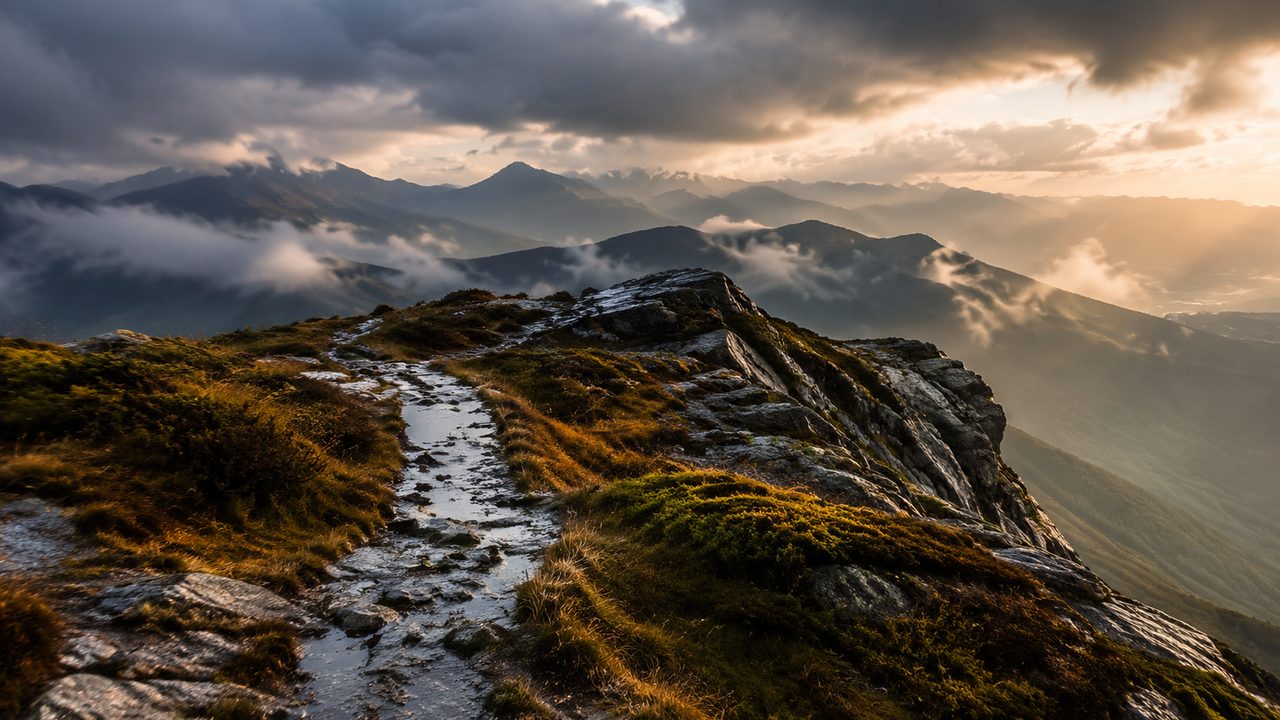
There is a particular beauty to a rain day that the postcards never show: the valley filled with low cloud, every green doubled by the wet, the streams suddenly loud, the mountains appearing and disappearing. Photographers call it flat light; walkers call it the days nobody else is out. The rain days are also the ones with no queues at the summits and no one else in the hut's drying room. If the trip is about the landscape rather than the peaks, the wet days deliver a different and often better version of it.
What the wet days give
By the end of a rainy week, the gear has been tested, the plan has been adjusted and the group has been through something together. The dry days afterwards feel like a reward rather than an entitlement. Most of our best trail stories start with that day it poured, and they are not stories of suffering — they are stories of the river crossing, the bothy fire, the unexpected sun at five. Rain days are not the interruption of a walk. They are part of the walk, and the walk is better for them.