The Camino de Santiago and the Kumano Kodo share an odd honour: they are the only two pilgrimage routes on the UNESCO World Heritage list, and Spain and Japan now let you earn a joint certificate by walking both. I have walked the French Way end to end and the Nakahechi twice, and the honest answer to which is better is that they are not the same walk at all.
Two pilgrimages, two rhythms
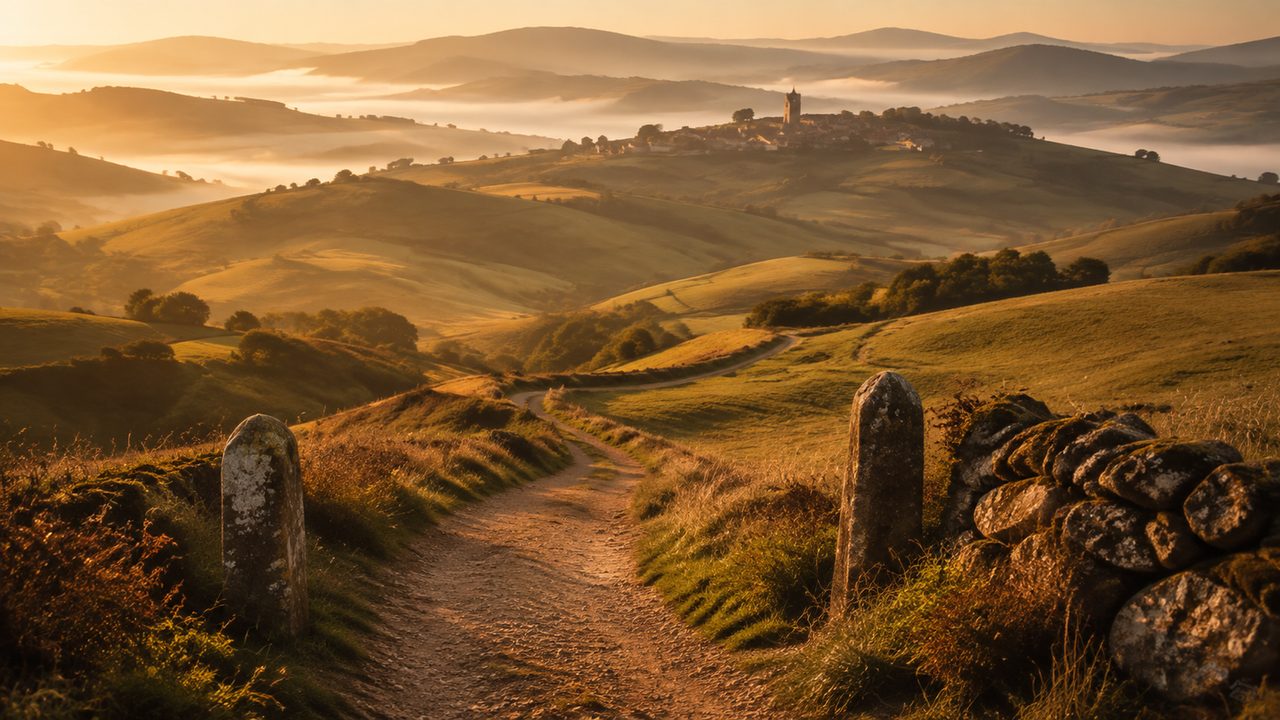
The Camino Francés is a 780-kilometre social corridor from the Pyrenees to Santiago. You wake with the same faces for a month, exchange stories over coffee, and measure progress in towns and stamps. Its genius is human: the trail becomes a village that moves at walking speed.
The Nakahechi is 38 kilometres of mountain path on the Kii Peninsula, usually walked in three days. There are no crowds, very few villages and no coffee stops. The rhythm is one of forest, shrine and stone — you walk in the company of the landscape rather than of other pilgrims.
The Nakahechi in three days
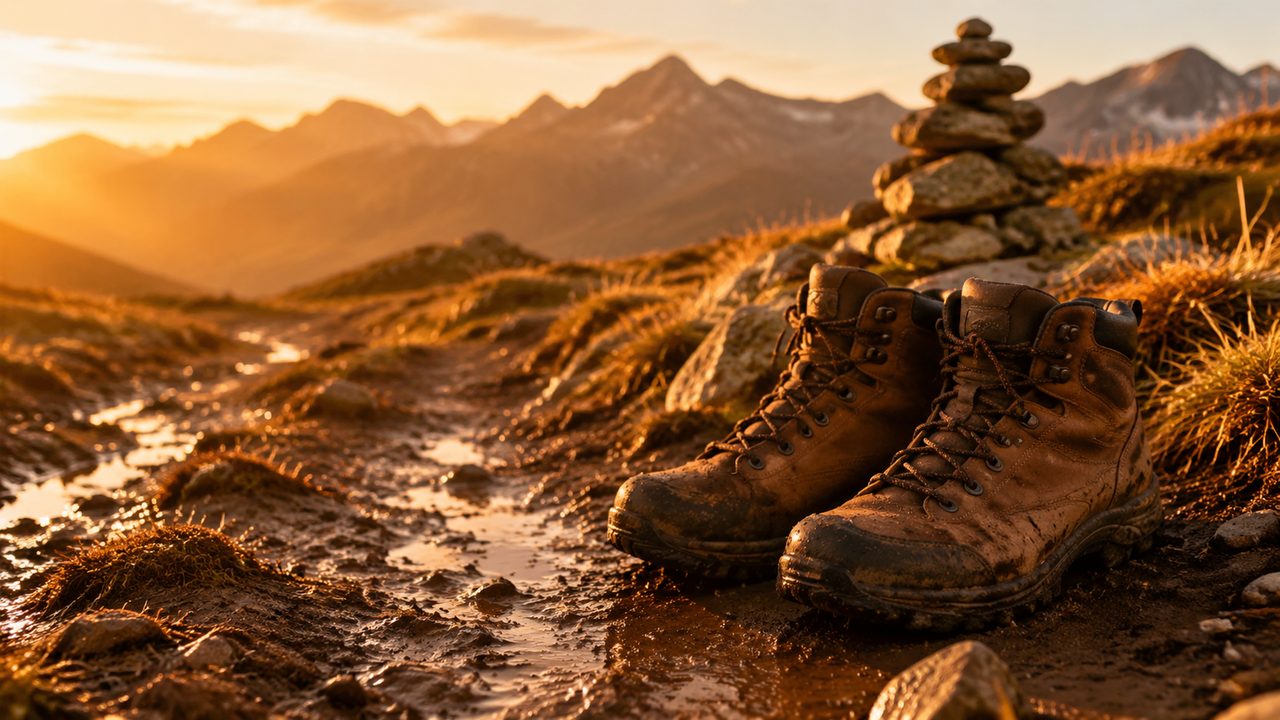
The classic entry starts at Takijiri-oji, a small shrine where the mountain gate once stood. The first day climbs through cedar forest to the hamlet of Takahara and over the Kogumotori-goe pass — a steep, rooty 700-metre pull that earns its reputation in the first hour and never lets up.
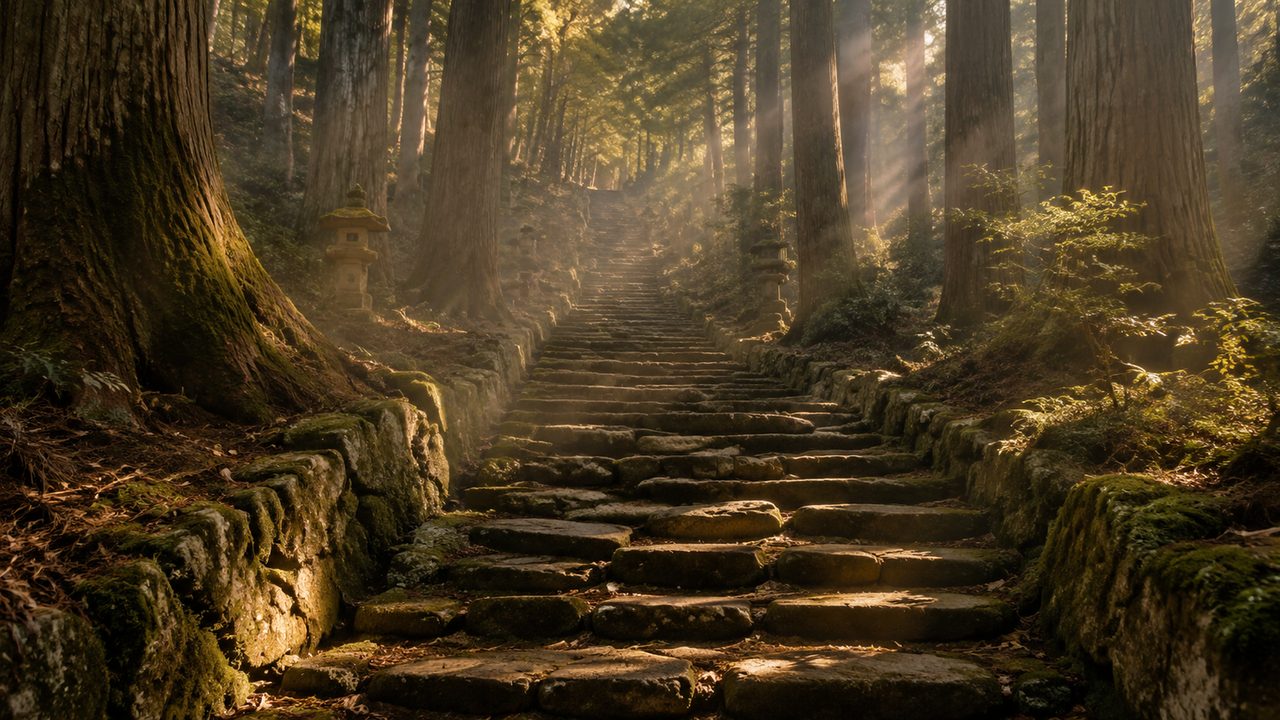
Day two follows the ridge toward Hongu Taisha, the great shrine at the route's heart, past oji shrines every few kilometres and a handful of tea houses. The third day takes the Daimon-zaka, a stairway of more than six hundred mossy stone steps, down to Nachi Taisha and the 133-metre waterfall beside it. Few walks end with such a crescendo.
What the Camino gives you
The Camino gives you the meseta, café con leche at eight in the morning, long flat days for thinking, and the extraordinary luck of meeting the same strangers at dinner three towns in a row. It is the easiest long-distance walk in the world to start because the infrastructure carries you.
The Kumano gives you solitude, rain in the forest, and the feeling of walking a road kept open for a thousand years by local people rather than by pilgrim offices. English signage is excellent and the trail is immaculate, but you will spend most of each day alone with the sound of water.
Cost and logistics
The Camino can be walked for 30–40 EUR a day if you stay in albergues and eat the menú del día; a full month on the Francés is realistically 900–1,200 EUR plus flights. Beds are first-come in summer, so arrive early in the bigger towns.
The Nakahechi is shorter and dearer per day. Oyado guesthouses with dinner and breakfast run about 12,000–15,000 JPY a night, and you must book ahead — there are only a handful of beds on the whole route. Budget three nights, trains from Osaka or Kyoto, and one spare day for weather.
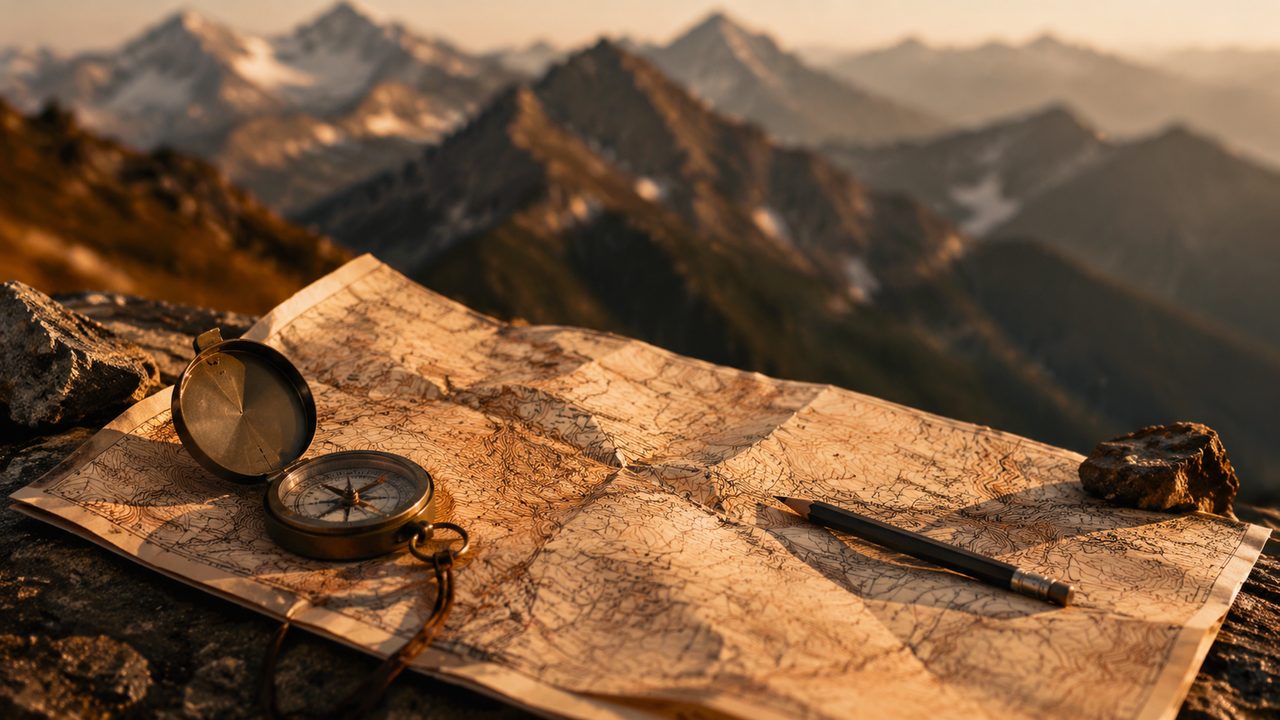
Both routes use a pilgrim passport and stamps. The dual-pilgrimage certificate needs stamps from each, so keep your credential dry and safe.
Weather and season
The Kii Peninsula is one of the wettest regions of Japan. June is the rainy season, and August is hot and humid enough to make the climbs miserable. October to November is the best window, with April and May close behind.
The Camino's sweet spots are May–June and September, when the meseta is not yet a furnace. August on the Francés is crowded and hot; in winter many albergues close and the mountain stages need real weather gear.
How to choose
If you have two weeks or more and you walk for the people you meet, take the Camino. If you have a long weekend and a week of holiday, and you walk for the silence, take the Nakahechi and spend the rest of the trip in Kyoto with sore legs.
Or do what the joint certificate expects and plan both, a year apart. The two routes compare so well precisely because they do not compete.